
About Beneath Behaviour
Beneath Behaviour provides psychology-informed mentoring and behaviour support for children and young people. We look beyond the behaviour we see, seeking to understand the experiences, relationships and wider context that may sit beneath it.
Our aim is to provide support that feels meaningful to the young person, strengthens engagement and helps create the conditions for lasting progress.
Click here to find out more about our services


Who We Support
We support children and young people aged 5–18 who may be experiencing challenges with behaviour, emotional wellbeing, engagement or education. This includes young people with SEND, including those with ADHD, ASD and other additional needs.
Every young person is different. Some may be struggling with confidence, emotional regulation, sensory needs, relationships, attendance, communication or previous experiences of education. Others may need support to better understand themselves, develop independence, build trust and reconnect with learning in a way that feels manageable and meaningful.
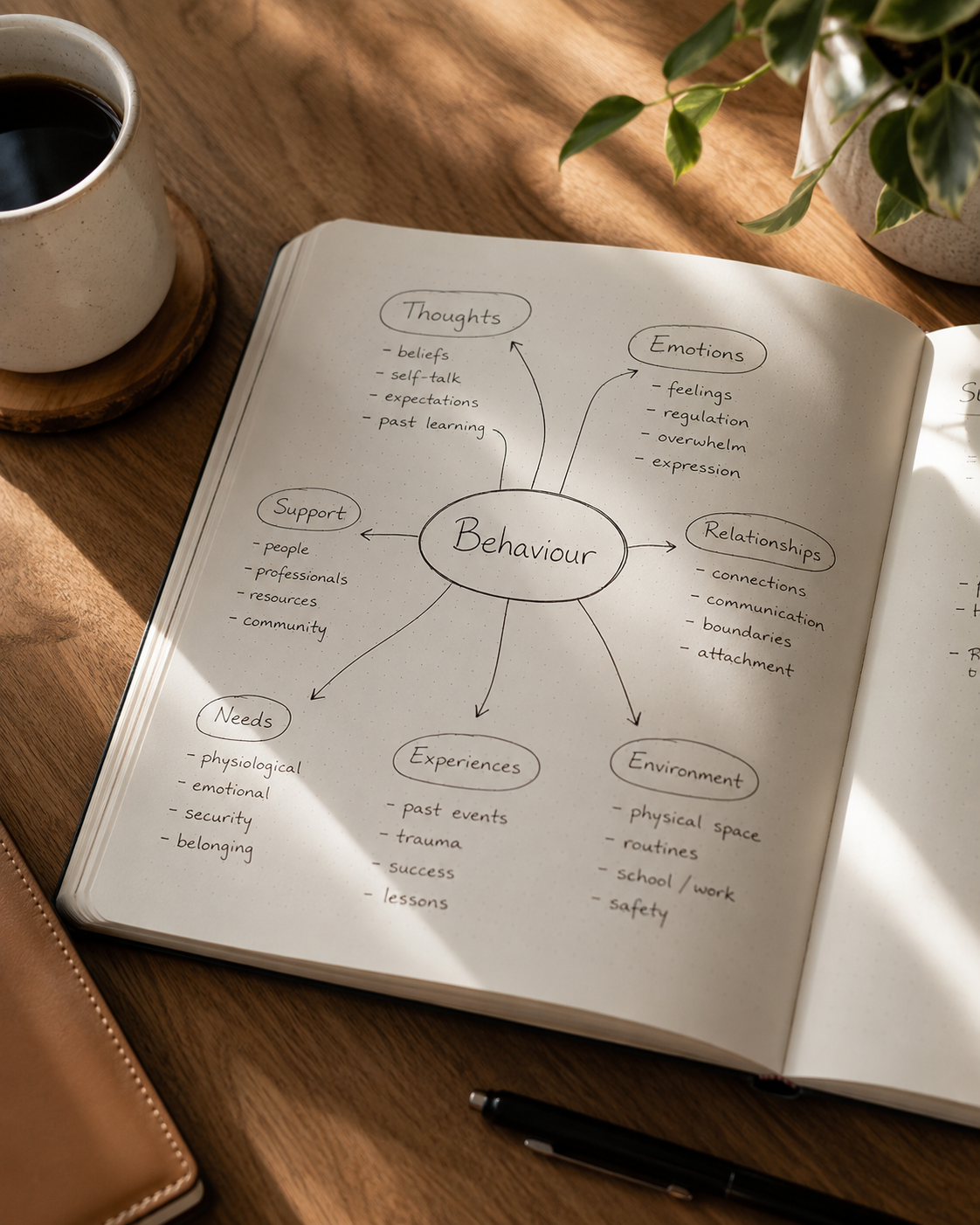
Our approach is individualised and psychology-informed. We take time to understand each young person’s strengths, needs, experiences and wider context rather than focusing only on the behaviour that others can see.
We start with the young person, not the behaviour.
The Young Person

We take time to understand strengths, interests, experiences and what matters to the young person – not simply the difficulties others can see.
Our Relationship

Meaningful change starts with trust. We prioritise consistent, respectful relationships where young people feel heard, understood and valued
Context

Behaviour does not happen in isolation. We consider the environments, relationships and experiences around the young person when understanding what support may help.
What Can Progress Look Like
1
Engagement
Reconnecting with education, activities and the people supporting them.
2
Emotional Regulation
Building greater awareness of emotions and developing ways to manage difficult moments.
3
Understanding
Developing a better understanding of themselves, including their diagnosis, strengths, needs and what may help them.
4
Progression
Working towards meaningful next steps, whether that is reintegration, education, training or greater independence.

